
What is D-allulose? The globally anticipated “star sugar substitute” has been officially approved in China!
After five years of prolonged anticipation, D-allulose--a highly anticipated new natural sweetener--has finally received its official "entry permit" in China. On June 26, 2025, the National Health Commission formally approved D-allulose as a new food ingredient. The announcement was made public on July 2, quickly generating significant excitement across the food industry and marking the official start of this "star sweetener's" commercial journey in China.
What Is D-Allulose? -- A Naturally Rare "Delicious and Healthy Sugar"
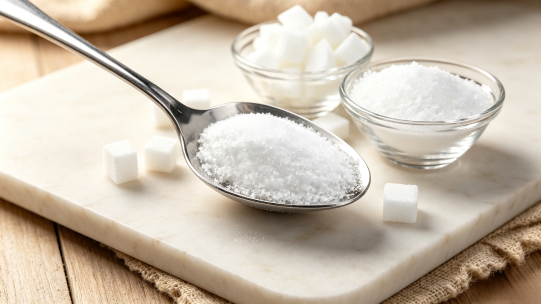
D-allulose (also known as allulose) is a monosaccharide found in extremely low quantities in nature, with trace amounts present in figs, kiwifruit, raisins, wheat, and other foods. As a diastereomer of fructose, it is often referred to as a "rare sugar."
In terms of taste, allulose can be considered the "perfect substitute" for sucrose. It delivers approximately 70% of the sweetness of sucrose, with a pure, clean taste and volumetric properties remarkably similar to those of sucrose. More importantly, like sucrose, it participates in the Maillard reaction, imparting appealing color and flavor to baked goods.
Its greatest health advantage lies in its ultra-low calorie content and unique metabolic pathway. Allulose provides only 1.67 kJ/g (0.4 kcal/g), roughly one-tenth the calories of sucrose. After ingestion, the majority (approximately 70%) is rapidly excreted through urine within six hours, with minimal involvement in human metabolism, and it does not cause significant spikes in blood glucose or insulin levels. Furthermore, it competitively inhibits glucose absorption in the small intestine, helping to control postprandial blood sugar peaks. In terms of lipid metabolism, studies have shown that allulose can suppress fat accumulation by downregulating lipogenic genes and upregulating fat oxidation genes, demonstrating potential anti-obesity effects. It has also been found to possess antioxidant and anti-inflammatory properties.
Global Regulatory Landscape: Approvals Amid Continued Caution
The "star" status of allulose stems not only from its exceptional properties but also from its growing recognition by food safety authorities across multiple major economies, with commercialization steadily advancing worldwide.
Pioneer--The United States:
The United States is the global leader in allulose commercialization. As early as 2012, the U.S. Food and Drug Administration (FDA) first received a Generally Recognized as Safe (GRAS) notification for allulose. More significantly, in 2019, the FDA issued guidance excluding allulose from the labeling metrics of "total sugars" and "added sugars," a policy that greatly accelerated its adoption across the food and beverage industry. Today, allulose is widely used in a variety of low-calorie products throughout the U.S.
Followers--Asia-Pacific Region:
Japan and South Korea: As early movers in allulose regulation, both countries have adopted a unique "enzyme-first" strategy. The enzyme used to produce allulose—D-allulose-3-epimerase—must be approved as a food additive, while the end product itself does not require a separate market authorization, effectively streamlining the route to commercialization. South Korea's Ministry of Food and Drug Safety (MFDS) formally recognized Matsutani's enzyme preparation in October 2023.
Singapore, Australia, and New Zealand: These countries have also successively approved allulose for use as a food ingredient.
Canada: Allulose has been approved as a natural health product ingredient.
A Cautious Observer -- The European Union:
Compared to other regions, the EU has taken a more guarded approach to allulose approval. Currently, allulose has not been authorized for use in food within the EU. As it is classified as a Novel Food, it must undergo rigorous safety evaluation by the European Food Safety Authority (EFSA). However, the applicant failed to respond to the additional data requests from EFSA, and thus its safety has yet to receive final confirmation. Industry analysts believe this is more an issue of procedural and data completeness rather than a definitive rejection of allulose's safety. Whether it will gain EU approval in the future largely depends on whether relevant companies are willing to commit the resources to complete the regulatory process.
Newest Member -- China:
According to Announcement No. 4 of 2025 issued by China's National Health Commission, approved D-allulose can be produced via microbial fermentation or enzymatic conversion, with a recommended daily intake of no more than 20 grams. As a precautionary measure, the ingredient is not suitable for infants, pregnant women, or nursing mothers. This approval not only fills a regulatory gap in China but also injects strong momentum into the country's vast sugar substitute market.
The approval of D-allulose in China represents more than the arrival of a new ingredient--it signals a strategic shift from "following" to "leading" in the domestic sweetener industry. Against the backdrop of accelerating global sugar reduction trends, this rare sugar, combining exceptional taste with functional health benefits, is poised to become a next-generation core sweetener driving food industry transformation. After five years of anticipation, the D-allulose story in China has just begun.
