
The Rise of Tagatose: Biosynthesis Breakthroughs and Regulatory Tailwinds Drive the Next Era of Rare Sugars
[Industry Spotlight] As consumer demand for health and wellness continues to surge, the market is actively seeking alternatives to traditional bulk and high-intensity sweeteners that can deliver true sugar-like taste without safety concerns or off-flavors. Taking center stage is D-Tagatose, a rare sugar celebrated for having a taste profile almost identical to sucrose.
Driven by dramatic cost reductions through enzymatic innovation and favorable label claims permitted by regulatory agencies, tagatose is rapidly transitioning from a niche ingredient to a mainstream sweetening solution, experiencing robust global growth.
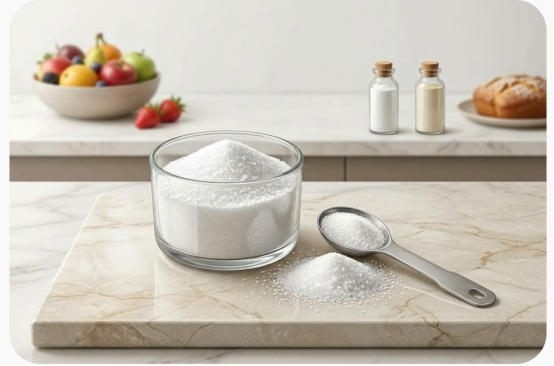
1. Key Innovations: The Biosynthesis Breakthrough
Although tagatose occurs naturally in trace amounts in dairy products, traditional industrial manufacturing relied on expensive galactose as a starting material. This yields low conversion rates and exorbitant costs, historically blocking its large-scale commercialization.
A Bio-Manufacturing Revolution: Recent breakthroughs in synthetic biology and enzymatic engineering have unlocked new metabolic pathways. Manufacturers can now directly convert low-cost glucose into tagatose with significantly higher conversion efficiency. This advance slashes production costs by orders of magnitude, paving the way for affordable, high-volume industrial use.
Commercial Scaling: Backed by major global food conglomerates and biotechnology ventures, large-scale plant-based production facilities are coming online, accelerating the integration of tagatose into consumer packaged goods worldwide.
2. Regulatory Landscape & Permitted Health Claims
|
Region / Country |
Regulatory Status |
Permitted Claims & Labeling Benefits |
|---|---|---|
|
United States (FDA) |
GRAS Status (Generally Recognized as Safe) |
• Dental Health Claim: "Does not promote tooth decay." • Low Glycemic Claim: Promotes a low glycemic response, suitable for diabetic and low-carb diets. |
|
European Union (EFSA) |
Novel Food Approval |
• Blood Glucose Management: Consuming food/beverages containing tagatose induces a lower blood glucose rise compared to sugar-containing equivalents. • Tooth Remineralization: Helps maintain tooth mineralization. |
|
China (NHC) |
New Food Ingredient Approval |
• Approved for use in general food processing (within specified daily limits and application scope). |
|
Australia / NZ / Korea |
Approved as a Novel / Functional Food |
• Permitted claims for low-calorie and low-glycemic functional sweeteners. |
3. Labeling Advantages & Food Applications
For food manufacturers, how tagatose is declared on nutrition labels is pivotal to its adoption.
Key Labeling Advantages
Exclusion from "Added Sugars": Leading regulatory authorities allow tagatose to be excluded from the "Total Sugars" and "Added Sugars" lines on nutrition facts panels, similar to allulose.
Significantly Lower Caloric Value: Standard sucrose is calculated at 4 kcal/g, whereas tagatose is declared at only 1.5kcal/g (roughly 38% the calories of sugar), helping brands dramatically lower the stated calorie counts on their packaging.
